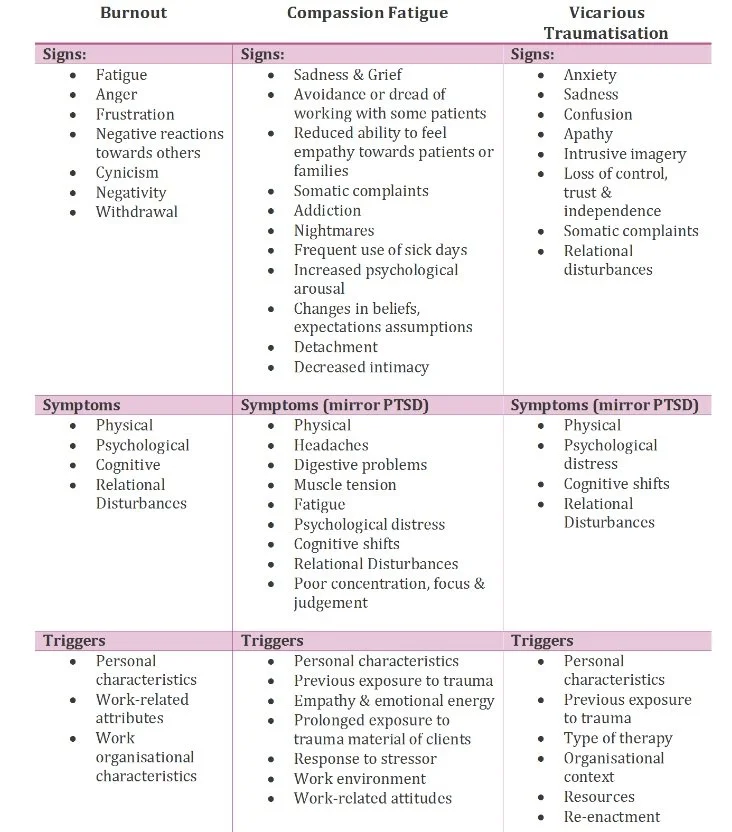
Warning signs & symptoms of burnout
Emotional signs of burnout:
Anger
Frustration
Negativity
Withdrawal
Fatigue
Cynicism
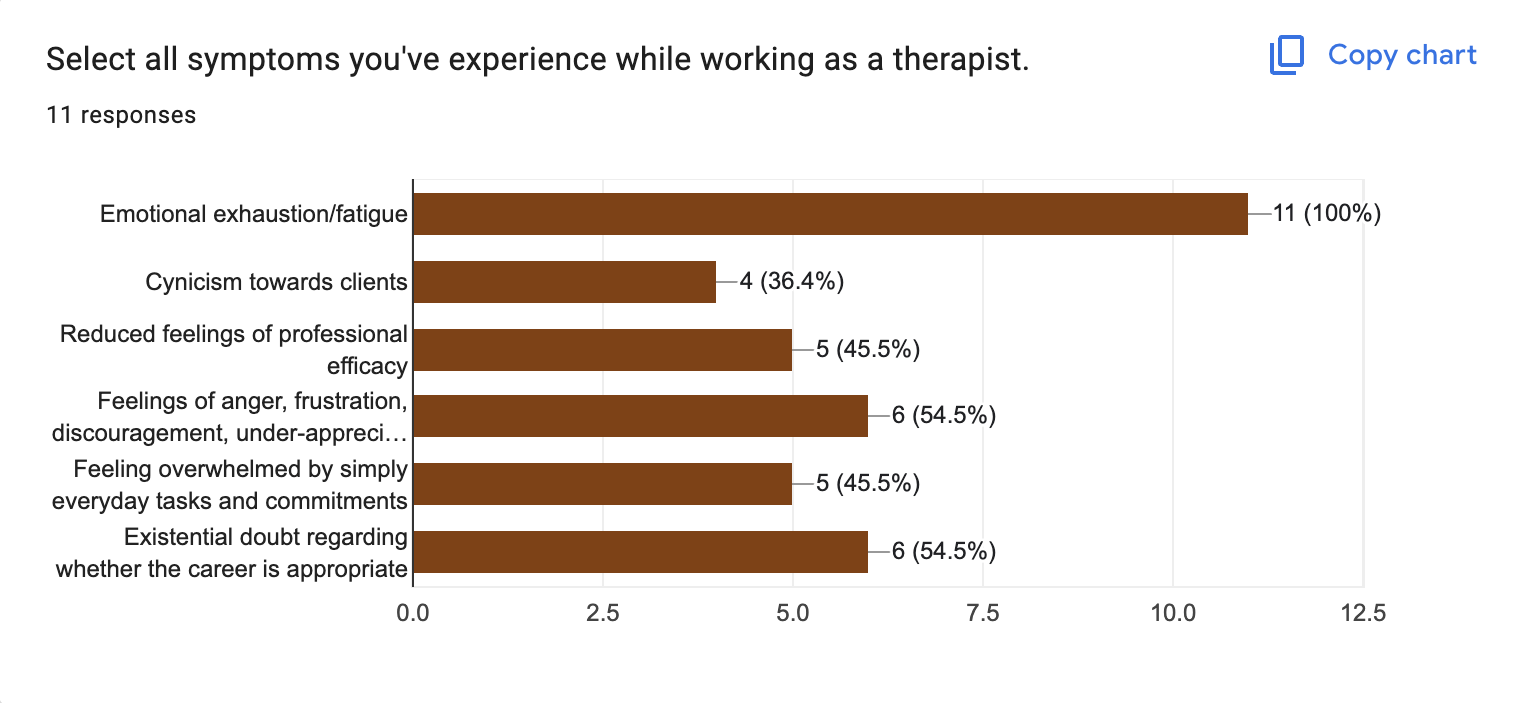
Results from survey conducted on burnout experiences among therapists:
Additional Signs of Burnout
Cynicism towards clients
Emotional exhaustion/fatigue
Feelings of anger, frustration, discouragement, under-appreciation, or dread for the week ahead
Existential doubt regarding whether the career is appropriate
Reduced feelings of professional efficacy
Feeling overwhelmed by simple everyday tasks and commitments
burnout among Bipoc clinicians
BIPOC clinicians are at high risk of burnout due to high workplace demands and workloads, systemic racism, and the emotional burden that comes with experiencing micro-aggressions in the workplace while simulatously supporting individuals who have experienced trauma.
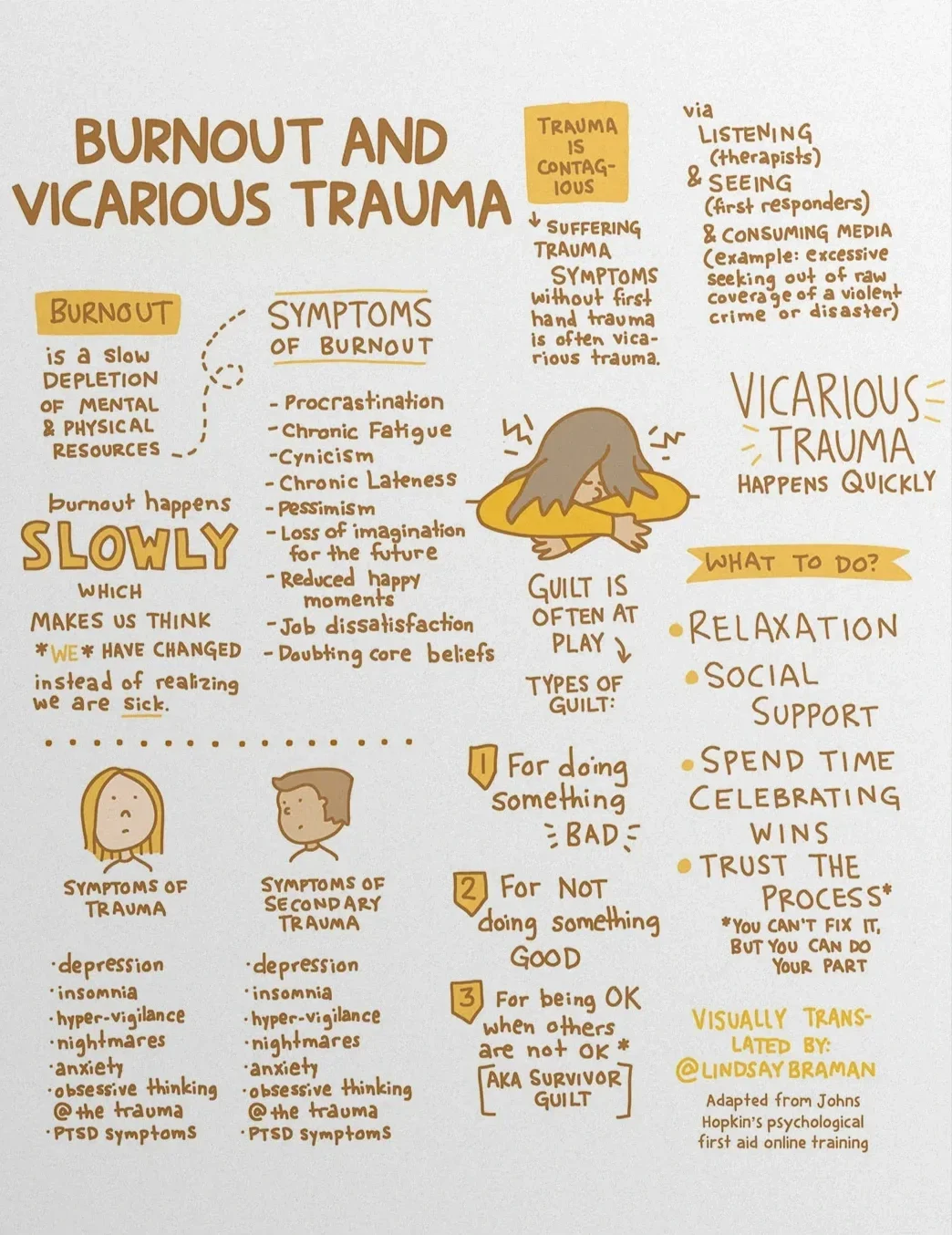
vicarious trauma & double exposure
Racial trauma experienced either directly by the clinician or vicariously through their clients increases the burden on providers of color and their risk of experiencing burnout. Political and social can impact BIPOC clinicians, even if they’re not the ones directly experiencing this. Harm repeatedly being depicted towards individuals who share a similar identity can result in the nervous system to respond in a way in which the threat is happening to the BIPOC clinician. This can result in anxiety or dread, difficulty with sleep or concentrating, emotional exhaustion or numbness, irritabiliity, grief, or a persistent sense of danger.
systemic inequalites & Racism
BIPOC providers often have greater experiences of racial discrimination which is correlated with higher work-related burnout and stress. To better support BIPOC clinicians peer consultation, surveys regarding stress, and anti-racism efforts within the workplace can all help BIPOC clinicians struggling with burnout or help to lessen risk.
high demand work settings
Unhealthy work-life balance can result in burnout among BIPOC clinicians. Common stressors experienced by these groups include feeling overworked, underpaid, or feelings of isolation. Often communities of colors prioritize others needs over their own, which can lead to feels of overwhelm and lead to burnout. Using maladaptive coping strategies (i.e. self-blame, substance use, etc.) perpetuates the issue of burnout among BIPOC clinicians